
Blog
Building with super intelligence
101 posts on running teams of super intelligent agents, the software factory that writes all my code, and what money becomes when intelligence runs on energy. Real numbers, including the ones that fall short.
202664 posts


Energy Is the Currency of the Universe
AI turns energy into solutions, and new power can't be built fast enough to keep up. The sun is the end state, and space is where it has no limits. Energy has the qualities of money, and AI fixes the ones it lacked. Energy is the currency of the universe, and we are entering the energy economy.


Are 100x Productivity Gains Really Possible With Multi-Agent Workflows?
My commit count went from about ten a day to nearly a thousand on my busiest day. Here is what the studies, the vendors, the companies and the practitioners actually show about AI productivity, and what a 100x claim can and cannot mean yet.


How Many Companies are Actually Using a Software Factory?
Agent-written pull requests are mainstream. An agent-run software factory is a different thing. Here is what the public evidence measures, a transparent estimate of companies, and the gap between coding and delivery.


Human Intelligence is Not the Ceiling, But the Floor for AI
Many people assume AI trained on human data can at best match us. I argue the opposite: human data gets AI to roughly human level, then search, self-play, reinforcement learning against verifiable outcomes, tools and scale take it past, and nothing obvious stops it there.


How I Merged 141 Pull Requests in One Day
On Saturday, November 14, I created 145 pull requests and merged 141 across four repositories, all by directing teams of AI agents. Here are the numbers, the workflow that ran that day, what I did, and what comes next.


Verification Is the New Programming
AI agents now match senior engineers on a large share of well-specified work. The engineer's job moves from writing code to writing the verification and the deterministic workflow that make agent output trustworthy.


Delegate All Your Grunt Work to AI Agents
A year ago AI couldn't reliably operate a computer. Now it can, and it already wrote code. Three new agent products prove the change. Have you delegated all of your grunt work yet?

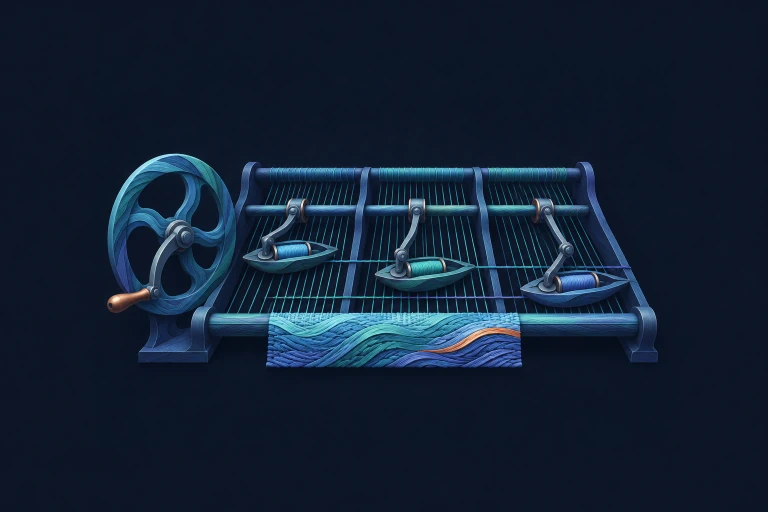
Industrial Revolution 2.0: The One-Person Factory
Factories made workers more productive by combining machines with divided labor, and corporations coordinated mills across cities. AI may put a whole factory under one person's direction. Here is what the evidence shows, what it doesn't, and who gets the gains.

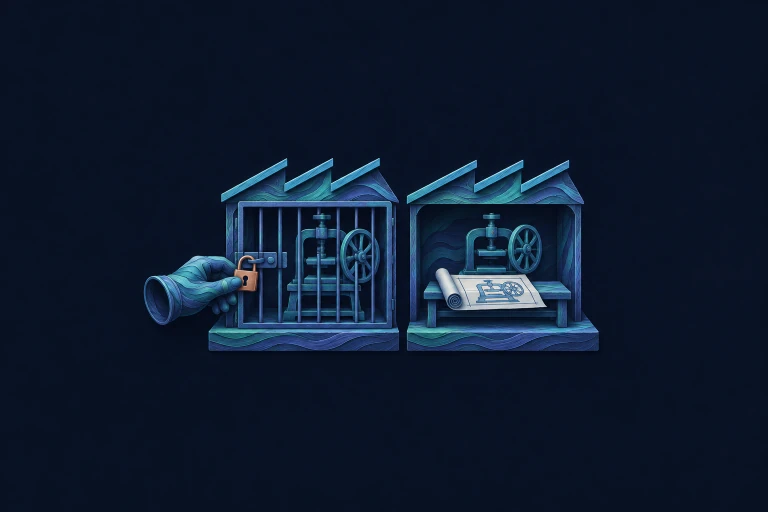
Rent the Factory or Own It?
What Factory buying HumanLayer means for every team building with agent swarms. You can rent a software factory or own one, and the difference shows up the day your vendor is acquired.


Thirty Days of Watching the Singularity
For 30 days, Singularity Watch recorded the news with sources. AI re-proved Fermat in Lean in under 29 hours, came to lead a quarter of Anthropic's research and launched an IPO. Here are the month's ten defining moments, the pattern under them and five predictions to grade at Day 60.


Software for Agents: A New Market Nobody Is Counting
A new kind of software is being sold right now that no human ever touches: an agent installs it and uses it, a human approves and pays, and not one market report counts it.
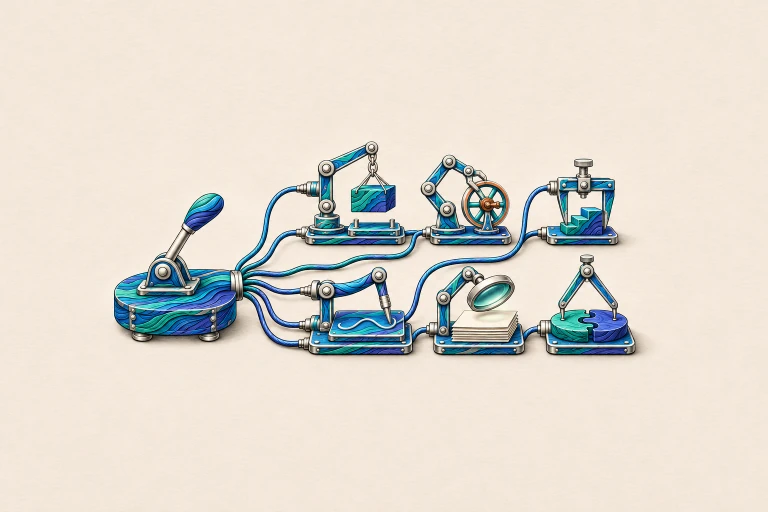
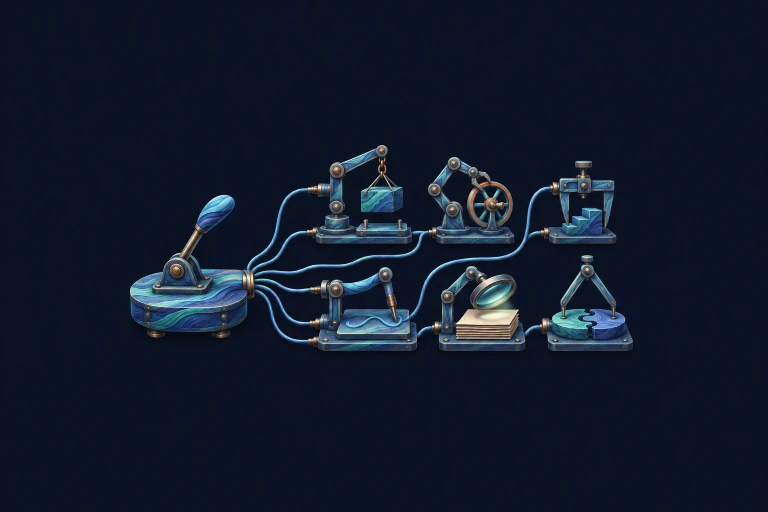
Delegate Everything You Can to AI Agents
Every task you do yourself that an AI agent could do is a choice to fall behind, and in the past year that list grew to include writing code, operating a computer and even research.


Own Your Memory: Sovereignty for the AI-Run Company
When AI agents do all the work, a company is its memory, and that memory must live in a repository you control so that no AI provider's ban, price change or policy change can ever take your business away.


Chat Systems for AI Agents: The State of the Art
Agents can now hand each other tasks through open protocols, run group chats inside frameworks, and sit in Slack beside people. A new kind of workspace puts agents from different vendors in the same channels as people. Here is what exists as of November 2026, how the options differ, and what none of them does yet.


Everybody Is a Director of AI Now
Every human on the planet needs to retrain to be AI-first: stop doing the labor and direct a team of SI agents to do it. Not just programmers. Nurses, lawyers, teachers, tradespeople and founders too. Here is what that means and how to start this week.


I Don't Write Code Any More - I Manage AI Agent Swarms
I stopped typing code more than a year ago. My job now is to manage swarms of SI agents. Here is what that job is, day to day: what I do, what I decide, what I never touch, which old management skills still work, and how to make the switch yourself.


Building Multi-Harness Multi-Agent Swarms
My projects are now built by swarms of SI agents that run in Codex, Grok and Claude Code at once. They share one workflow made of Nushell tools, AGENTS.md files, skills and Git. Here is how it works, what it shipped in three and a half days, and where it still breaks.


Money Won't Survive Super Intelligence
Energy is money is tokens: three names for one thing. As SI agents turn joules straight into solutions, the middle term gets thin. Money as wages and invoices won't survive super intelligence. Money as memory will.


The Software is Alive!
When a team of SI agents builds and maintains an app, the app starts to behave like a living thing. It senses, repairs itself and adapts to attacks, markets and the news, within bounds that humans set. Here is what that means, what works today, and where the bounds go.


The Future of Money Is Energy
Every token an SI agent spends is paid for in joules. As intelligence gets cheaper, energy becomes the one input left, and the sun makes it the frontier resource. Money will not become energy, but energy is becoming what money measures.


When the Car Comes Out Broken, Fix the Factory, Not the Car
When an SI agent ships something wrong, I do not patch the output. I fix the issue, the skill or the rule that made it, so every future agent gets it right. Here is the factory I run from chat windows today, the car it built this morning, and the harness I want instead.

492 Useful Commits on a Sunday
Last weekend, my SI agents made 447 useful commits on Saturday and 492 on Sunday, through about 7 p.m. In 2024, I averaged 19.3 commits a day. Here is how we count, what the number does not mean, and how far it is from my goal.

CAD for Software
Engineers stopped drawing parts by hand when CAD let them describe the part and let the machine make the drawings. Software is at the same turn. The spec, the rules and the checks are the design file. The code is the output.


My Computer Is a Team of Super Intelligent Agents
A supercomputer used to be one big machine. Mine is a team of super intelligent agents and one monorepo: the agents are the cores, the team is the CPU, the repo is the memory, and I am the scheduler. How to build one, where it breaks, and why the limit is now my attention.


I Make 156 Commits a Day Now
I counted every commit I made since 2024 across all of my repositories, with each commit counted once. In 2024, I made 19.3 commits a day. This October, I made 156 a day. The curve is AI, and it is still going up.


Run Agents Longer. Then Run More of Them.
Two multipliers decide how much work super intelligent agents do for you: how long each agent works without you, and how many agents work at once. What the industry has learned about both, what ran at Astrohacker this month, and the limit that is left.


Inside the Software Factory That Writes All My Code
I made 4,526 commits in October and wrote none of them by hand. This is the factory that made them: what the industry means by a software factory, what runs at Astrohacker today, what I still do myself, and what we build next.


Agency Trumps Intelligence
Super intelligence already solves problems better than any human. When it fails, the cause is coordination: a missing workflow, a missing API, a missing machine. Human intelligence now takes the back seat. The human job is agency: decide what to do next, and arrange the super intelligence to do it.

Our Bot Decided the Singularity Is Here
We set up a Grok bot to watch the singularity on X and post a daily record at @AstrohackerLabs. In its first week, it changed its verdict from 'not here yet' to 'we are living in it.' The technological singularity is already here. The economic singularity is next.


Stop Solving Problems. Build the Agent That Does.
Super intelligence now solves math that no human could solve. Robots learn any behavior we can record. A trained model can be copied and run forever at falling cost. If no agent or robot can do your work yet, building one is a higher-impact job than doing the work. Then grow the team, forever. That is how we build abundance.


Super Intelligence Engineering is the Last Job
The AI labs now automate their own research faster than anyone else automates anything. They still keep one job for humans: set the direction and check the result. That job is super intelligence engineering, and every other job is turning into it.

Every Developer Needs an Exoskeleton and a Drone Army
A developer in 2026 needs two things: an exoskeleton, a customized harness for the hard work that needs full attention, and a drone army, a software factory of agents for all the work that does not.


All Human Labor is Better Done By Machines Now
Every job is a function. Neural networks can approximate any function. Language, robotics, and original mathematics, including OpenAI's hundreds of new proofs, prove it in practice. Machines get cheaper every year. The last job for humans is to oversee the super intelligence, and that is a liberation.


We Are All Managers of Super Intelligence Now
In one year, senior engineers went from reviewing every line to writing and reading none of it. The job now is to manage super intelligent agents: keep them working for hours, and keep many of them working at the same time.


What Is Applied Super Intelligence Engineering?
Hand-coding is over. Applied super intelligence engineering is the new job: humans set priorities and connect SI to context and tools, and SI solves the problems. The limit is no longer the human mind. It is energy.


The State of EarthBucks 2.0: Verification Is Back, and the Mines Are Next
Paid verification is back on EarthBucks, with a 10x mining advantage. Here is how EarthBucks got here, what EarthBucks 2.0 is today, and what comes next.


The Only Thing Left To Do Is Unblock The Super Intelligence
Hand the puzzles to super intelligence. The productive human job is to get it GPUs, money, and energy, and to point it at the problems that matter.
- The Living RepoBuild the machine that builds the machine: a repository where AI, tools, and customer feedback become a continuous software development process.
- The New Greatest Generation
- Parallel Agentic Engineering: Stop Running Just One Agent
- TermSurf 0.2.0: Graphical Apps Inside the Terminal
- My Vision for the Economic Singularity
- Identellica, Artintellica, KeyPears, Hallucipedia, TermSurf, Shannon, and RSS Anyway Redirect to Astrohacker
- Keep the Names
- It's Astrohacker Now
- TermSurf 1.0: The Terminal That Surfs
- Set the Goal, Walk AwayI no longer solve software issues. I specify them, type /goal, and one AI solves it while a second AI keeps it honest. PDF support in a day; Ghostty porting itself from Zig to Rust right now.
- Use RSS Anyway
- Very High Level Programming
- EarthBucks 2.0: Making EBX Real
- Two Locks on Every Message: KeyPears Goes Hybrid Post-Quantum
- Expanding Text, Shrinking Text, and Translating Text: That's the Whole Job
- Issues and Experiments: A Lab Notebook for Software
- RSS Anyway Preview: Subscribe to Anything on the Internet
- Stop Writing Code: Why I Haven't Typed a Line in Six Months
- Introducing Astrohacker: My Portfolio Company for Shells, Cash, and Messaging
- KeyPears Alpha Is Live: Federated End-to-End Encrypted Messaging and Secrets
- TermSurf 0.1.0 Has Been Released on Homebrew! — A GPU-Accelerated Chromium Browser Inside Your Terminal
- Introducing Shannon: A Shell That Speaks Both Nushell and Bash
- Why We Need a Webview Overlay Protocol for Terminal Emulators
- Research Driven DevelopmentA methodology for building truly innovative software with AI — where experiments replace plans, failure is progress, and the lab notebook is the product.
- When Apps Cost Nothing, Protocols Are Everything
- The Blogger-King
- Introducing TermSurf: A Browser Inside Your Terminal
202534 posts
- AI is Better at Writing Code Than You Are in 2025
- How I Use Claude Code to Do My Entire Job as a Software Engineer in 2025
- For the Love of God, Add an RSS Feed to Your Tech Blog
- Why I'm Building a Password Manager of All Things
- Why I Moved to Austin Instead of San Francisco
- The Markdown Programming Language (Second Edition)
- I'm Done With Social Media and Here's What I'm Doing Instead
- English is the Best Programming Language in 2025
- KeyPears Teaser: A Decentralized Diffie-Hellman Key Exchange System
- Cleaning Up AI Slop With AI
- AI is My IDE Now
- AI is Like Steroids for Programmers and Should Be Illegal
- Building a Technical Debt Factory with AI Agents
- Responsible Use of AI for Senior Software Engineers in October, 2025
- English is a High Level Programming Language Now
- We Are All Software Architects Now
- How I Trained a Neural Network in Nushell
- Why Store Chats in Markdown Files
- Introducing npm: A Nushell Package Manager
- Introducing Termplot: Beautiful Plots in Your Terminal
- Introducing Chatvim v0.3.0 and Chatvim CLI (and Deprecating Codey)
- Why and How I Switched Back to Nushell from Zsh
- Introducing Codey: Piping LLMs on the Command Line
- Learn Reinforcement Learning and the Training Loop with PyTorch on Artintellica
- Learn Deep Learning with NumPy on Artintellica
- Learn Stuff by Writing Your Own Textbook with AI
- Building a Search Engine with LLMs
- Introducing Chatvim: Chat with Markdown Files in Neovim
- Introducing Artintellica: Open-Source AI Resources for Learning Machine Learning
- Why I Switched Back to Node.js from Bun
- Why I Switched Back to Zsh from Nushell
- My Tech Stack in 2025
- Introducing Hallucipedia: The Encyclopedia on Drugs
- Thinking Outside the Box for the Next Era of Bitcoin Cash